

Short answer
There is no legal rule about whose name goes first. Traditionally, the bride's name came first, but today many couples list names in the order they prefer, often alphabetically or with the person they know best first. Choose what feels right for you.
There is no legal rule about whose name goes first on a wedding invitation in the UK. The tradition of putting the bride's name first comes from older etiquette, but it is not a requirement. Many modern couples now list their names in the order that feels most natural to them, such as alphabetical order, or the person who is closer to the guests sending the invitation.
If you are sending invitations to different groups, you might find it easier to keep the same order throughout for consistency. Some couples choose to put the name of the person whose family or friends are receiving the invitation first, but this is entirely optional. The most important thing is that both names are clearly written and the invitation feels welcoming.
For same-sex couples, there is no traditional order, so you are free to decide. For opposite-sex couples, you can also ignore the old convention if you prefer. If you want a traditional feel, put the bride's name first, but if you prefer equality or a different logic, that is fine too. The wording of the invitation should be clear and easy to read. If you are unsure, ask your stationer or check with your venue, but there is no official rule to follow.
From us
Website packages · Wedding print Wedding websiteWedding Website£499 one-offYour full wedding website with RSVP for every event, meal choices and a private link for each household.See Wedding Website →
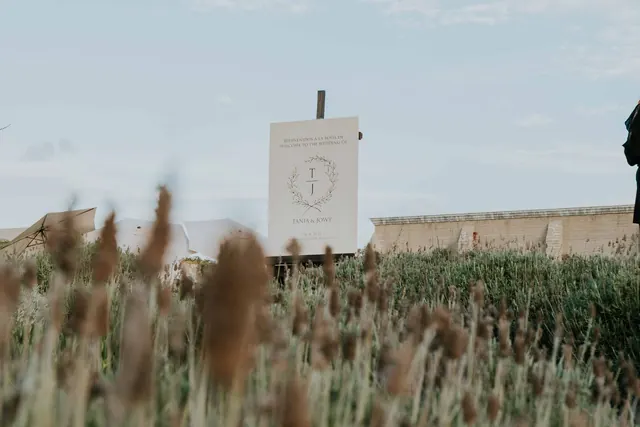 Wedding printA2 sign boardsfrom £37.18A2 boards for the order of the day, the bar menu, an unplugged ceremony sign or directions.Design it online →
 Wedding printPrinted wedding invitationsfrom £36.28Printed invitations and save the dates on quality card, with a QR code that opens your wedding website.Design it online →
 Wedding printThank-you cardsfrom £42.34Folded thank-you cards with your favourite photo from the day on the front.Design it online →
 Answers from couples and guests
No answers from readers yet. Been through this yourself? Share what worked for you.
Add your answer
Related questions
- Does the bride put her last name on the wedding invitation?
- Whose name should be written in RSVP?
- What is the etiquette for RSVPing to a wedding invitation?
- What is the first rule of etiquette?
- Which parent walks down the aisle first?
- How long should I give people to RSVP for a wedding?
From other topics



 Save the date cards
 Order of service booklets
 Table plan boards
 Welcome signs