

Programme or order of service?
They are the same thing. Wedding programme is the American name; in the UK most couples call it the order of service. It lists each part of the ceremony in order, names the people taking part and gives the words of any hymns or responses guests will join in with.
What goes on the cover
The cover carries your names, the date and the venue. Many couples add a short line such as "The marriage of" or "Together with their families". Keep it simple: the inside does the work.
- The marriage of Sophie Clarke and James Patel
- Saturday 6 September 2026
- St Mary's Church, Ludlow
From us
Website packages · Wedding print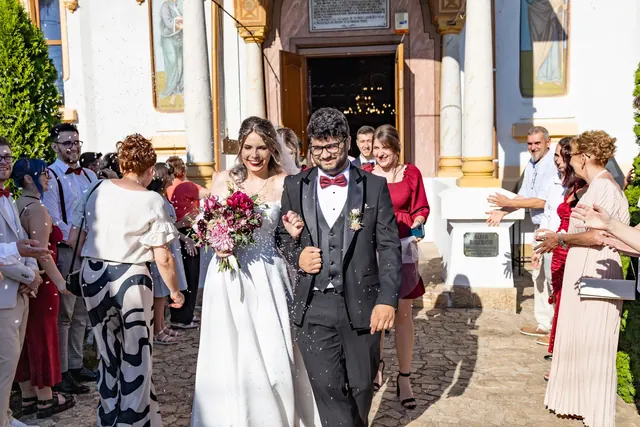 Wedding websiteE-Invite£49 one-offOne beautiful page with the details, a map and a family RSVP, sent by link, QR code or WhatsApp.See E-Invite →
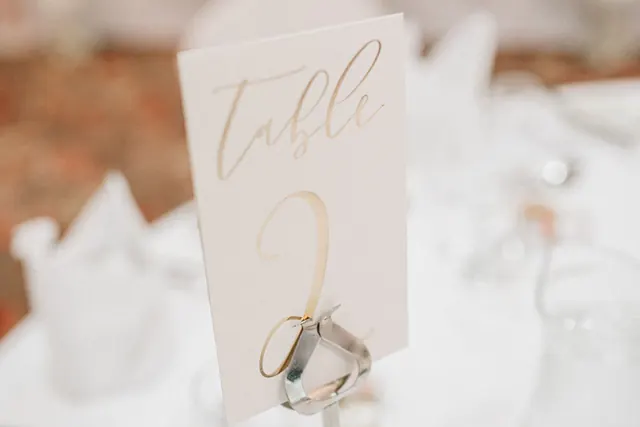 Wedding printTable numbers and place cardsfrom £14.52Folded tent cards for table numbers, table names, place cards and drink menus.Design it online →
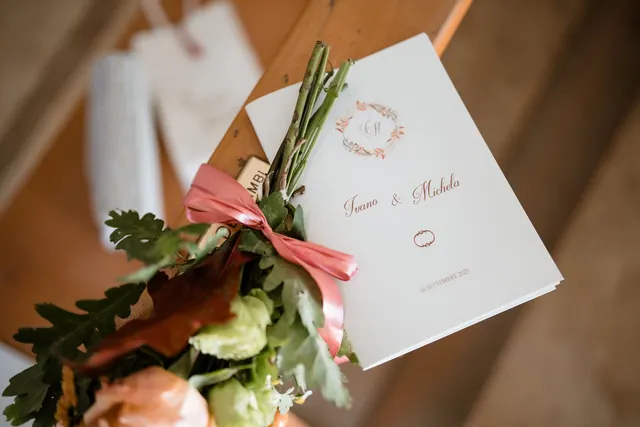 Wedding printOrder of service bookletsfrom £78.64Stapled booklets for the order of service, hymns, readings and the people in your wedding party.Design it online →
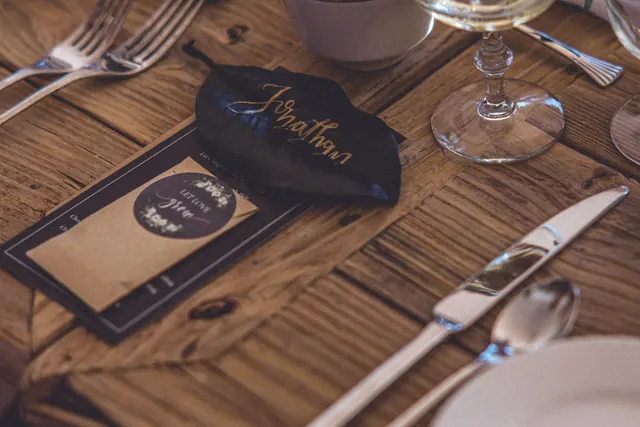 Wedding printFolded menus and programmesfrom £48.78Creased and folded cards for menus, a simple order of service or the plan for the day.Design it online →
Civil ceremony wording
A civil ceremony is short and has a fixed legal part, so the order of service is usually one card or a four-page booklet.
- Entrance of the bride (or the couple)
- Welcome by the registrar
- Reading: title and name of the reader
- The declarations and contracting words
- Exchange of rings
- Signing of the register
- Exit of the newly married couple
Civil ceremonies cannot include religious readings or music, so check every reading and song with your registrar before you print.
Church ceremony wording
A church service is longer and guests need more help to follow it, so include the words of the hymns and any responses.
- Processional music
- Welcome
- Hymn, with the words printed
- Reading
- The marriage: vows and the giving of rings
- Prayers
- Hymn
- Signing of the register
- Recessional music
Ask your vicar or minister for their order before you write yours; the order and wording vary from church to church.
Humanist and celebrant ceremonies
A humanist or celebrant ceremony is written around you, so the order of service can include your story, a hand-fasting or a ring warming. In England and Wales these ceremonies are not legally binding on their own, so many couples hold a short register office ceremony as well; there is no need to mention that in the programme.
Thank-yous and the back page
The back page is a good place for a short thank-you to guests, a line remembering loved ones who cannot be there, and practical notes: where to go after the ceremony, when the photographs will be taken and whether guests are asked not to take photographs during the service. Add your wedding website address so guests can find the day's timings.
Nikah, Sikh and Hindu ceremonies
Faith ceremonies often have more parts than a civil service, and many guests will not know what each one means, so a short explanation under each heading is a kindness.
- Nikah: the khutbah, the agreement of both partners, the signing of the nikah contract and a dua
- Anand karaj: the ardas, the four laavan around the Guru Granth Sahib, and karah parshad
- Hindu ceremony: Ganesh puja, the kanyadaan, the saat phere and the sindoor
Ask your imam, granthi or priest to check the order before you print, as practices differ between families and communities.
Remembering loved ones
Many couples add a line for family members who have died. Keep it simple and warm, for example: "Today we remember with love those who cannot be with us, especially Grandad Harold." Some couples prefer a quiet symbol, such as a small flower or a photograph on a table near the entrance, with a line in the order of service explaining it.
Size, paper and design
The most common format is an A5 booklet folded from A4, with four or eight pages. A single A5 or DL card works for a short civil ceremony. Use the same paper and design as your invitations so the stationery feels like one set, and choose a font size guests can read in a dim church or a bright garden.
Common mistakes to avoid
- Printing before the registrar, minister or celebrant has approved the order
- Leaving out the words to hymns or responses guests are expected to say
- Spelling readers' names wrongly
- Printing too few: guests who share one often end up without
- Forgetting the order of service for the people taking part, who need their own copies
Printing and quantities
Print one booklet per guest, or one between two for couples, plus a few spare for the readers and the registrar or minister. Order of service booklets usually fold to A5. If your ceremony is short, a single card or a printed wedding programme in the same design as your invitations works just as well.
Checklist
- Get the official order from your registrar, minister or celebrant
- Check every reading and song is allowed
- Write the cover: names, date, venue
- List each part of the ceremony in order
- Print the words of hymns and responses
- Add thank-yous and practical notes on the back
- Order one per guest, or one between two
Questions on this topic
What goes in order of service for a wedding?
An order of service is a printed booklet that guides guests through the ceremony, listing the music, readings, vows and who takes part. It usually names the couple, the date and venue, and includes the words to any hymns or responses so everyone can join in. Read the full answer
What is the typical order of service for a wedding reception?
A wedding reception order of service is a simple card or sign showing the running order of the day, from drinks and photos through to the meal, speeches, cake and dancing. It is not a legal document, just a friendly guide so guests know what happens when. Read the full answer
Who speaks in what order at a wedding?
There is no fixed legal order of speakers at a UK wedding. The order depends on your venue, ceremony type and personal choice. The registrar or officiant usually leads the legal part first, then readings, vows and rings, followed by any speeches you choose to include. Read the full answer
Can I create my own order of service for my wedding?
Yes, you can create your own order of service for your wedding. It is a printed or digital programme that lists the ceremony order. You can design it yourself or use a template, and you can include hymns, readings, vows and names of the wedding party. Read the full answer
Who walks down the aisle in a traditional wedding?
In a traditional UK wedding, the bridal party walks down the aisle first, then the bride walks last, usually with her father or another close relative. But traditions vary widely, and many couples now choose their own order, including walking together. Read the full answer
Who typically walks down the aisle first during a wedding ceremony?
Typically, the ushers or groomsmen walk down the aisle first, followed by the bridesmaids, then the bride. But this is just a custom. You can choose any order that works for you, and many couples now walk together or have parents walk first. Read the full answer
 Wedding invitations
 Save the date cards
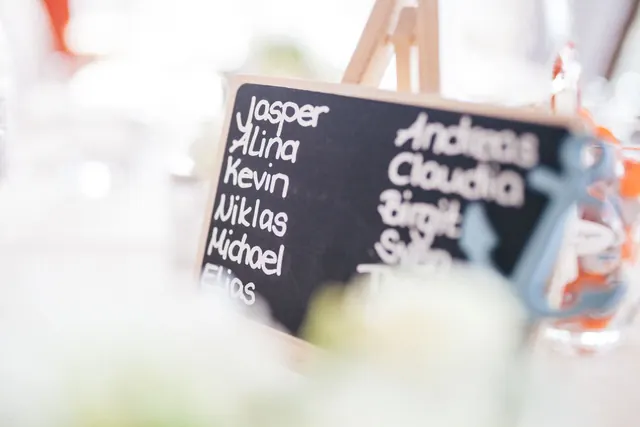 Table plan boards
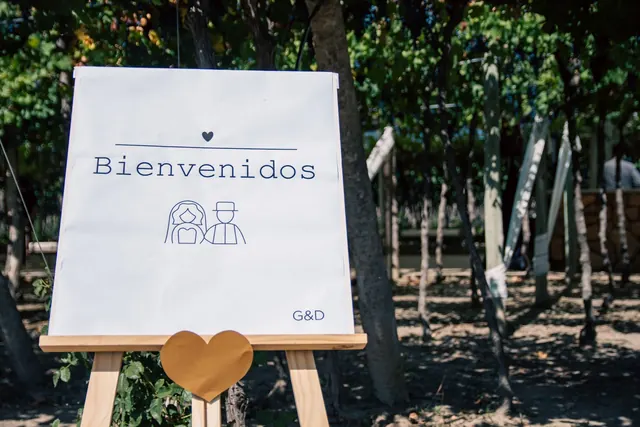 Welcome signs
 Thank-you cards