

Free tool · Invitation wording
Wedding invitation wording generator
Choose who is hosting and the style. We write the wording; you copy it or change it.
Loading the tool…
Free to use. Everything you type stays in your own browser on this device; nothing is sent to us.
How to use the wedding invitation wording generator
- Pick who is hosting and the style you want.
- Read the wording we write for you.
- Copy it or change the words you like.
- Check names, dates and venue spellings.
- Print or send your invitations.
How to word wedding invitations in the UK
Start by deciding who is hosting. This decides the opening line. Couples hosting often write their own names. Parents hosting usually say 'Mr and Mrs Smith invite you'. Divorced parents can each be named, or one parent can host alone. Choose wording that feels right for your family.
Next pick a style. Formal wording uses full titles and 'request the honour of your presence'. Relaxed wording can use first names and 'invite you to share our day'. Religious couples may add a line about a service. The tone should match your venue and guest list.
Tips for every family set-up
Keep it simple and clear. Guests need the who, when, where and how to reply.
- Name both partners, not just one.
- Give the full date and time.
- Write the venue name and address.
- Add an RSVP line with a date.
- If parents are divorced, list them on separate lines.
- For stepfamilies, include only the parents who are hosting.
- Religious ceremonies may mention the service after the reception.
When to send your invitations
Send invitations about three months before your wedding. Save-the-dates can go out earlier if you like. Guests need time to plan travel and time off work. Include an RSVP date a few weeks before the wedding so you can finalise numbers. If some guests are travelling from abroad, send them earlier. Check every name and address carefully before you print. Your wording is the first thing guests see, so make it warm and clear.
From us
Website packages · Wedding print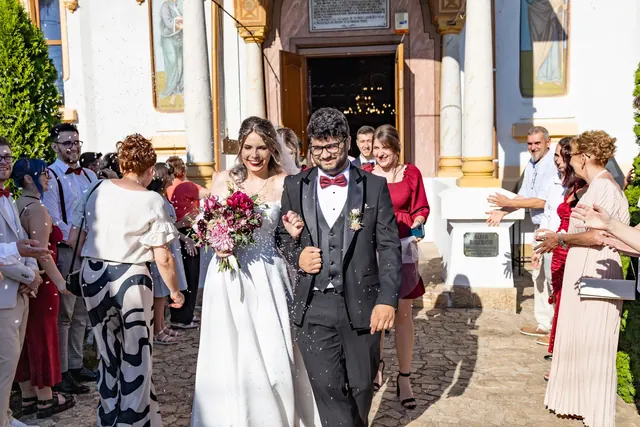 Wedding websiteE-Invite£49 one-offOne beautiful page with the details, a map and a family RSVP, sent by link, QR code or WhatsApp.See E-Invite →
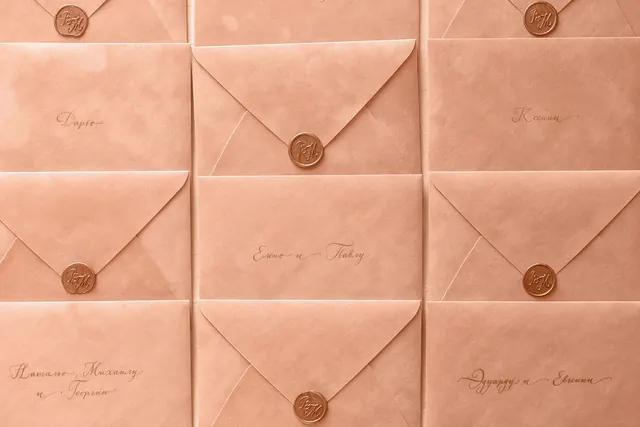 Wedding printPrinted wedding invitationsfrom £36.28Printed invitations and save the dates on quality card, with a QR code that opens your wedding website.Design it online →
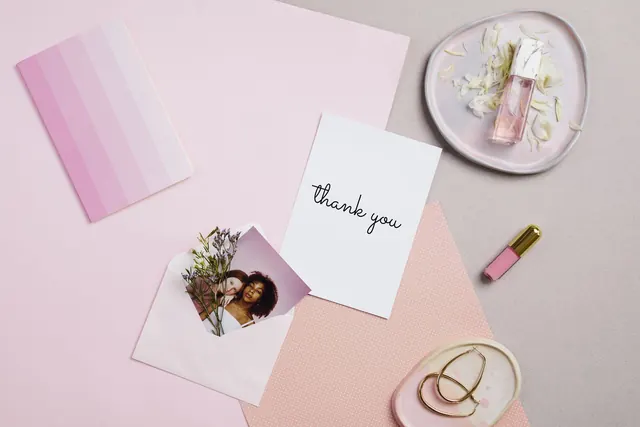 Wedding printThank-you cardsfrom £42.34Folded thank-you cards with your favourite photo from the day on the front.Design it online →
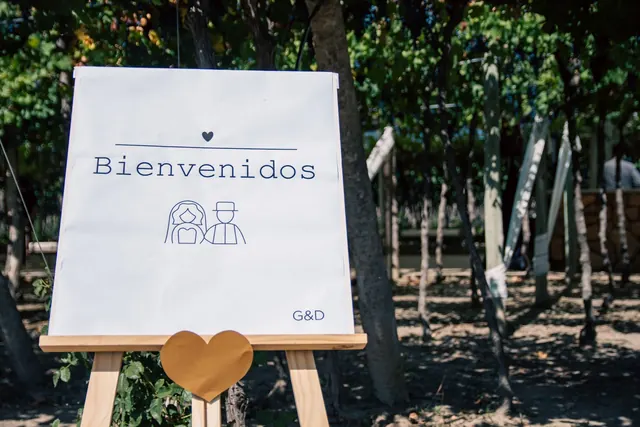 Wedding printWedding welcome signsfrom £20.38Rigid welcome boards for the entrance or an easel, printed with your names and date.Design it online →
Questions people ask
What is a classic wording for a wedding invitation?
A classic wording is: 'Together with their families, [Name] and [Name] request the pleasure of your company at their wedding on [date] at [time] at [venue].' It is formal, clear and timeless. Read the full answer
How do you write a wedding invitation message?
Start with the hosts, then the couple's names, the request, the date, time and venue, and finish with reception details and RSVP. Keep it clear, warm and personal. Read the full answer
How to word a wedding invitation with divorced parents?
List each parent or set of parents on separate lines, using their current names, without 'and' between them if they are divorced. For example: 'Emma Smith and James Brown, together with their parents, invite you...' Read the full answer
Do parents' names go on wedding invitations?
Not always. Parents' names go on invitations if they are hosting or if you want to honour them. If the couple hosts, you can write 'Together with their families' or just your own names. Read the full answer
What do you usually put on a wedding invitation?
A wedding invitation usually includes the hosts' names, the couple's names, the date and time, the venue address, and a request to attend. Add dress code, meal choices, and RSVP details if needed. Keep it clear and warm. Read the full answer
What are 10 examples of invitation sentences?
Here are 10 invitation sentences you can adapt. They cover formal, informal, religious and civil ceremonies. Each one leaves space for your names, date, venue and RSVP details. Read the full answer
 Save the date cards
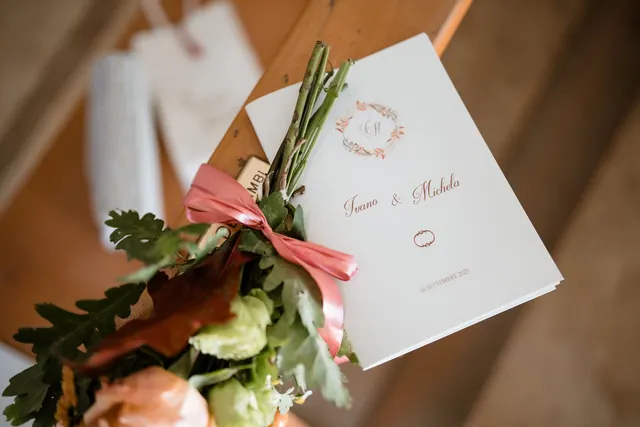 Order of service booklets
 Table plan boards