

Traditional UK wedding ceremony order
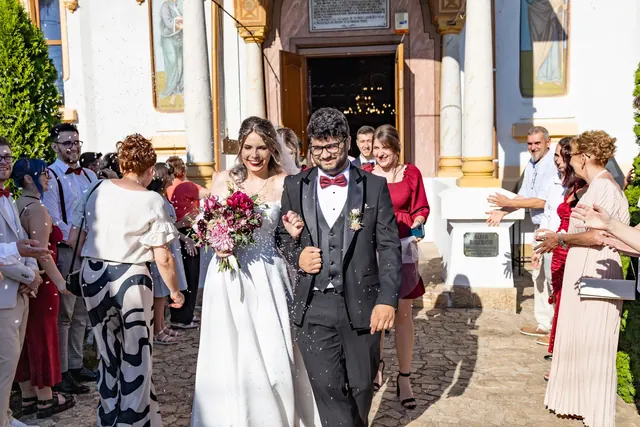
In a traditional UK wedding, the order usually follows a familiar pattern. Guests arrive and are seated, then the groom, best man and officiant take their places at the front. The bridal party walks down the aisle, often with the chief bridesmaid and page boys first, followed by the bride and her father or another significant person. The bride is given away, then the ceremony begins with readings, vows and the exchange of rings. After the legal declaration and signing of the schedule, the couple walks back up the aisle as newlyweds.
This order is not a legal requirement. In England and Wales, the only legal parts are the declaration and the contracting words, which must be said in the presence of the registrar or authorised person and two witnesses. In Scotland and Northern Ireland, the rules are similar but check with your registrar or celebrant. You can adapt the order to suit you, as long as the legal bits happen correctly.
Traditional wedding processional order in the UK
The traditional processional order in the UK often looks like this:
- Ushers seat guests, including grandparents and the couple's parents.
- The groom, best man and officiant enter from the side or front.
- The bridesmaids and page boys walk down the aisle, sometimes in pairs.
- The bride walks down the aisle with her father or another escort.
- The bride's mother is usually seated last, just before the bride walks.
This order assumes a bride and groom with a father present. But you can change it completely. Many couples walk together, some walk alone, and some have both parents or their children walk with them. The processional is your chance to set the tone, so choose what feels natural for you.
From us
Website packages · Wedding print Wedding websiteWedding Website£99 one-offYour full wedding website with RSVP for every event, meal choices and a private link for each household.See Wedding Website →
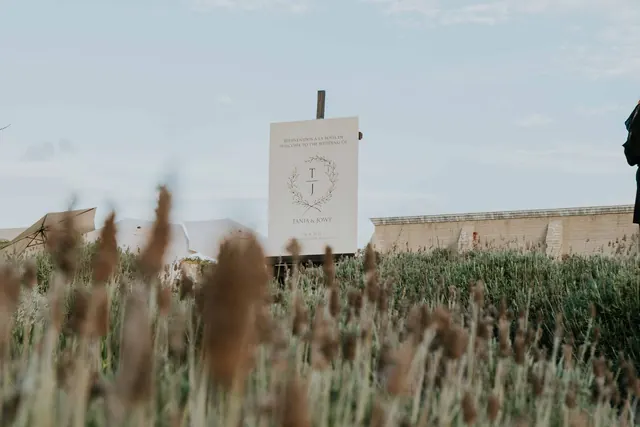 Wedding printA2 sign boardsfrom £37.18A2 boards for the order of the day, the bar menu, an unplugged ceremony sign or directions.Design it online →
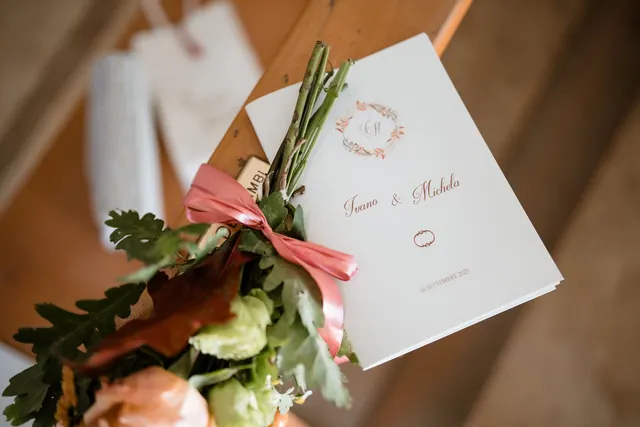 Wedding printOrder of service bookletsfrom £78.64Stapled booklets for the order of service, hymns, readings and the people in your wedding party.Design it online →
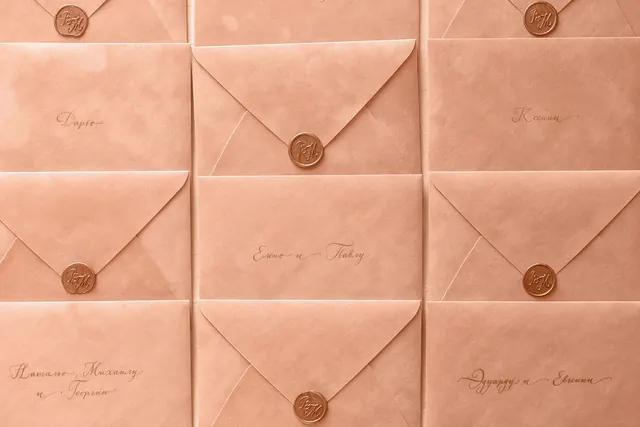 Wedding printPrinted wedding invitationsfrom £36.28Printed invitations and save the dates on quality card, with a QR code that opens your wedding website.Design it online →
Who gives the bride away and what if there is no father?
The tradition of giving the bride away comes from a time when a woman was property, passed from father to husband. Today, many couples keep the gesture as a symbol of love and support, but it is not a legal requirement. In the UK, no one has to give anyone away. The registrar or officiant will ask who presents the couple, or they may not ask at all if you prefer.
If you do not have a father, or you do not want a traditional giving away, you have many options. Your mother, a grandparent, a sibling, a close friend or your own child can walk with you. You can walk alone, or you can walk with your partner. Some couples choose to have both parents walk them down the aisle, one on each side. Others have a moment where both sets of parents walk together, symbolising the joining of families. The choice is entirely yours.
Modern alternatives for any family shape or couple
Modern weddings are wonderfully flexible. You might decide that no one gives anyone away. Instead, you can have a moment where both partners walk down the aisle together, or they meet halfway and walk the rest of the way side by side. Some couples include their children in the processional, with the children walking first or carrying rings.
You can also include a blessing or a symbolic act, like a handfasting or a unity candle, but remember that in England and Wales, civil ceremonies cannot include religious content. Check with your registrar if you are unsure. For same-sex couples, the same options apply, and you can choose who walks with you based on your own family and friendships. The key is to make the processional and the giving away feel meaningful to you, not to follow a script that does not fit.
Which side does the bride stand on?
In a traditional UK ceremony, the bride stands on the left side of the couple when facing the officiant, and the groom stands on the right. This comes from the old custom of the groom keeping his right hand free to draw a sword. But this is not a rule. Many couples stand however feels comfortable, and the registrar or celebrant will guide you.
If you are having a civil ceremony, the registrar will tell you where to stand. In a religious ceremony, the officiant will do the same. You can also choose to stand facing each other, side by side, or in a circle with your guests. The important thing is that you can see each other and your guests can see you.
Wedding ceremony order of service with parents and grandparents
If you want to include parents and grandparents in the processional, here is a common order:
- Grandparents are seated first, often by ushers.
- The groom's parents are seated, then the bride's mother is seated last before the bridal party.
- The bridesmaids and groomsmen walk down the aisle.
- The ring bearer or page boys may walk before the bride.
- The bride walks with her escort.
But you can adapt this. Some couples have both sets of parents walk together, or they have a parent walk each partner down the aisle. You might also have a moment where the couple's parents stand at the front during the ceremony, or they stay seated. Talk to your officiant about what you want, and they will help you plan the order of service so everyone knows where to be.
Creating your own giving-away moment
You can create a giving-away moment that reflects your values. For example, you might have both parents walk you down the aisle, then they each give you a hug before taking their seats. Or you might have a parent say a few words before you walk, or a friend play a song that is meaningful to you. Some couples choose to have a short reading about family and support before the processional begins.
If you want to honour a parent who has passed away, you can carry a photo, wear a piece of their jewellery, or have a seat reserved with a flower. You can also have a moment of silence or a candle lit in their memory. The giving away is not about ownership; it is about love and support. Make it your own, and your guests will remember it for all the right reasons.
Checklist
- Decide whether you want a traditional processional or a modern alternative
- Talk to your partner about who walks with whom, if anyone
- Consider including parents, stepparents, children or friends in the processional
- Check with your registrar or officiant about the legal requirements and any restrictions on content
- Plan the order of service and share it with your bridal party and ushers
- Decide which side you will stand on, and let your officiant know
- If you want to honour a parent who has passed away, plan a way to include them
- Rehearse the processional and giving-away moment so everyone feels confident
Questions on this topic
What is the typical order of a wedding ceremony in the UK?
The typical order is: guests arrive, the couple and wedding party enter, readings or vows are exchanged, rings are given, the couple is pronounced married, and they sign the legal documents. Then they walk back up the aisle together. Read the full answer
Who walks down the aisle first?
Usually the bridal party walks first, followed by the bride or couple. But there is no legal rule, and many couples now walk together, with parents, or in any order that feels right for them. Read the full answer
What is the correct order for a wedding reception?
The usual order is: drinks reception, guests seated, wedding breakfast or meal, speeches, evening reception with cake cutting and first dance, then dancing and evening food. You can adjust it to suit your day. Read the full answer
What is the structure of a wedding ceremony?
A wedding ceremony is structured around welcoming guests, exchanging vows and rings, making the legal declaration, and signing the marriage document, with optional readings, music and rituals added around these core parts. Read the full answer
Does the groom walk down the aisle to music?
Yes, the groom can walk down the aisle to music, and it is entirely your choice. There is no legal rule about who enters first or what music plays. Read the full answer
What happens during the wedding ceremony?
A wedding ceremony is a legal declaration followed by celebrations, and its shape depends on your choice of venue and faith. You exchange vows and rings, sign the marriage document, and are introduced as a married couple. Read the full answer
 Save the date cards
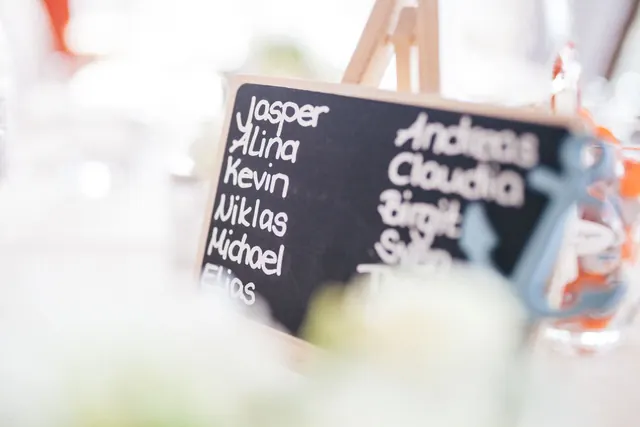 Table plan boards
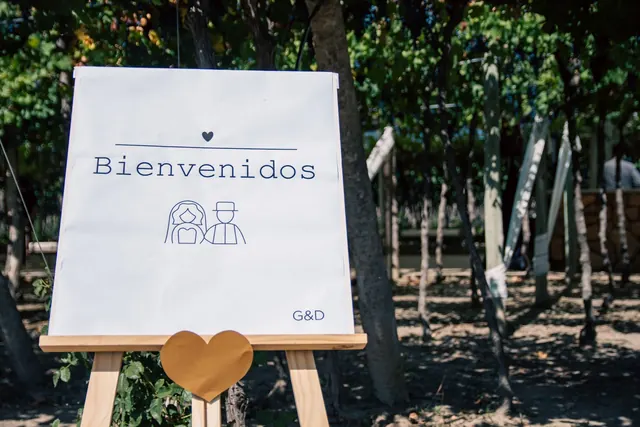 Welcome signs
 Thank-you cards