

How giving notice of marriage works in the UK
Giving notice is the legal step that tells the registrar you intend to marry. It is a formal appointment where you declare that you are free to marry and provide the necessary documents. The process is similar across the UK, but the details differ between England and Wales, Scotland, and Northern Ireland.
In England and Wales, you give notice at the register office for the district where you have lived for at least the last 7 days. In Scotland, you submit a marriage notice to the registrar for the district where the wedding will take place. In Northern Ireland, you give notice to the registrar in the district where the wedding will happen.
You cannot give notice online. You must attend in person, and in most cases you and your partner go together. Some register offices allow one person to give notice if the other cannot attend, but this is not standard. Check with your local office first.
Who must give notice and when to do it
Both partners must give notice, unless one of you is unable to attend for a genuine reason, such as being abroad or ill. In England and Wales, you must give notice at least 28 full days before the ceremony. In Scotland, it is at least 29 days, and registrars advise giving 10 to 12 weeks. In Northern Ireland, it is at least 28 days.
Your notice is valid for 12 months in England and Wales, so your wedding must take place within that time. In Scotland and Northern Ireland, the validity period is also 12 months, but check with the registrar for the exact rules.
If either of you is subject to immigration control, the notice period can be longer. The registrar will tell you if this applies to you.
From us
Website packages · Wedding print Wedding websiteWedding Website£99 one-offYour full wedding website with RSVP for every event, meal choices and a private link for each household.See Wedding Website →
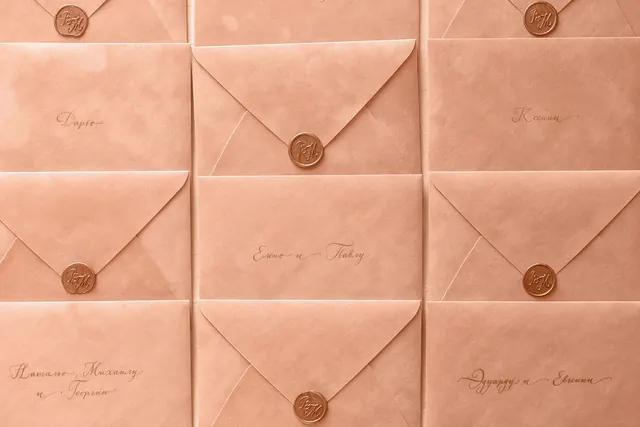 Wedding printPrinted wedding invitationsfrom £36.28Printed invitations and save the dates on quality card, with a QR code that opens your wedding website.Design it online →
 Wedding printThank-you cardsfrom £42.34Folded thank-you cards with your favourite photo from the day on the front.Design it online →
 Wedding printWedding welcome signsfrom £20.38Rigid welcome boards for the entrance or an easel, printed with your names and date.Design it online →
What documents you need to give notice
You need to prove your identity, nationality, and address. The exact documents vary, but you will usually need a valid passport or a full birth certificate. If you do not have a passport or birth certificate, you may be able to use other documents, such as a driving licence, a biometric residence permit, or a citizenship certificate. Check with the register office before your appointment.
You also need proof of your address, such as a utility bill or bank statement, dated within the last 3 months. If you have been married before, you need the decree absolute or final divorce certificate. If you are a widow or widower, you need the death certificate of your former spouse.
If you have changed your name by deed poll or marriage, bring the relevant documents. If you are from outside the UK, you may need a visa or certificate of no impediment. Always ask the registrar what they accept.
What information you need to give notice
At the appointment, you will be asked for personal details. This includes your full name, date of birth, occupation, and address. You will also give your parents' names and occupations. You need to state where the wedding will take place and the date.
You will be asked whether you have been married before and whether you are related to your partner. You will also be asked if you are giving notice for a civil or religious ceremony. The registrar will check that you are both free to marry and that the venue is legal.
Be ready to spell your name exactly as it appears on your documents. The information you give will be recorded on your marriage schedule or document, so it must match your official paperwork.
What happens at the giving notice appointment
The appointment usually takes about 15 to 20 minutes. You and your partner meet the registrar, who will ask you the questions listed above. You will each sign a legal declaration confirming that you are free to marry. The registrar will then display your notice publicly for a set period, usually 28 days, so that anyone can raise an objection.
If no objection is made, you will receive a marriage schedule or document. In England and Wales, this is signed on the day of your wedding. In Scotland, you will get a marriage schedule to give to your celebrant. In Northern Ireland, you will get a marriage licence or certificate.
You do not need to bring witnesses to the notice appointment. Witnesses are only needed at the ceremony itself, and they must be aged 16 or over in Scotland.
Can you give notice at any register office or on a weekend?
You cannot give notice at any register office. In England and Wales, you must attend the office for the district where you have lived for at least 7 days. In Scotland and Northern Ireland, you must attend the office for the district where the wedding will take place. If you live in different districts, you may need to give notice separately, but many couples go together to one office.
Register offices are usually open Monday to Friday, and some offer Saturday appointments. You cannot give notice on a Sunday or a public holiday. You must book an appointment in advance, either by phone or online, depending on the office. Some offices have limited availability, so book as soon as you know your wedding date.
Checklist
- Check the rules for your nation: England and Wales, Scotland, or Northern Ireland.
- Confirm you have lived in the correct district for at least 7 days (England and Wales).
- Book your notice appointment as early as possible, ideally 10 to 12 weeks before the wedding.
- Gather your identity documents: passport or birth certificate, and proof of address.
- Bring any previous marriage or divorce documents, if applicable.
- Decide whether you will give notice together or separately, and check if your office allows that.
- Prepare the details you will need: full names, addresses, parents' names, and venue details.
- Attend the appointment and sign the declaration.
- Wait for the notice period to pass and collect your marriage schedule or document.
- Keep your notice valid by making sure your wedding happens within 12 months.
Questions on this topic
What to expect at giving notice of marriage?
Giving notice is a formal appointment at your local register office where you state your intention to marry and answer questions about your identity and relationship. It usually takes about 15 to 20 minutes and must be done in person by both of you. Read the full answer
What documents are needed to give notice of marriage in the UK?
You need proof of your name, date of birth, nationality and address, plus evidence of your marital status if you have been married before. The exact documents vary, so check with your local register office before your appointment. Read the full answer
What evidence do I need to give notice of marriage?
You need evidence of your identity, nationality and address, and if you have been married before, evidence that the marriage or civil partnership has ended. Bring original documents, and check with your register office for their specific requirements. Read the full answer
What questions are typically asked when giving notice of marriage?
The registrar will ask for your full name, date of birth, address, nationality, occupation and marital status, and confirm the date and venue of your wedding. They will also ask whether you are related to each other in a way that prevents marriage. Read the full answer
What happens at a notice of marriage appointment?
At the appointment, you give your details to a registrar, who checks your identity and confirms you are free to marry. You both attend in person, and the registrar records your notice. It is a straightforward, formal meeting. Read the full answer
What happens after you give notice?
After you give notice, your notice is displayed publicly at the register office for 28 days. If no one objects, you can legally marry within 12 months. You will receive a marriage schedule or document to sign on the day. Read the full answer

 Save the date cards
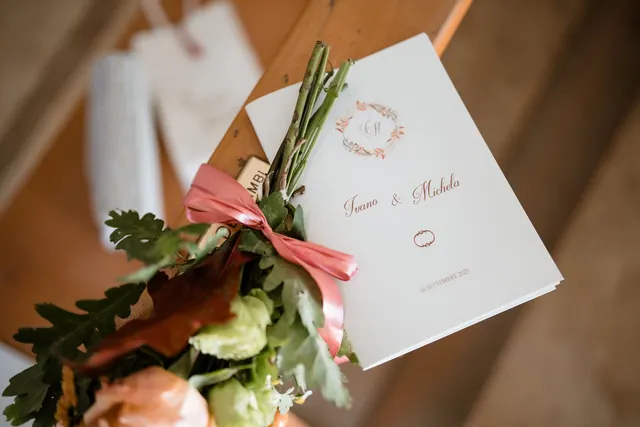 Order of service booklets
 Table plan boards