

Traditional wedding processional order in the UK
The traditional processional order in the UK usually starts with the groom and the best man. They enter from the side or the front and wait at the altar. Then come the grandparents, followed by the groom's parents, then the bride's mother. The bridal party walks next, with the maid of honour or chief bridesmaid last before the bride. The bride walks down last, often with her father or another significant person, and the ring bearer or flower girls may come just before her.
This order is not fixed. Many couples change it to suit their families and preferences. The key is that everyone knows when to walk and where to stand once they reach the front.
Who walks down the aisle first at a wedding?
In a traditional UK wedding, the groom and best man are usually already at the front, so the first people to walk down the aisle are the grandparents. If you are not having grandparents, then the groom's parents may be first, followed by the bride's mother. After that, the bridal party walks, and finally the bride.
If you are having a same-sex wedding, you can decide who walks first. Some couples choose to walk together, while others have one partner walk with their parent and the other with theirs. There is no rule that one person must be first. The important thing is that you both feel comfortable and happy with the plan.
From us
Website packages · Wedding print Wedding websiteWedding Website£499 one-offYour full wedding website with RSVP for every event, meal choices and a private link for each household.See Wedding Website →
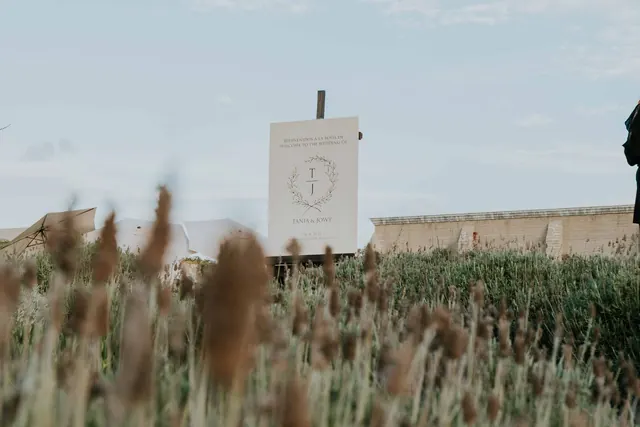 Wedding printA2 sign boardsfrom £37.18A2 boards for the order of the day, the bar menu, an unplugged ceremony sign or directions.Design it online →
 Wedding printOrder of service bookletsfrom £78.64Stapled booklets for the order of service, hymns, readings and the people in your wedding party.Design it online →
 Wedding printPrinted wedding invitationsfrom £36.28Printed invitations and save the dates on quality card, with a QR code that opens your wedding website.Design it online →
 Wedding processional order with parents and grandparents
Here is a common order for grandparents and parents in a traditional UK ceremony:
- Groom's grandparents
- Bride's grandparents
- Groom's parents (groom's mother on the arm of groom's father or a friend)
- Bride's mother (sometimes escorted by a family member or friend)
- Then the bridal party and the bride
Some couples choose to have both sets of parents walk together, or have the bride's mother walk with a partner or sibling. You can also have parents walk in a different order, for example, the bride's parents first. The key is to tell everyone the order in advance and have a rehearsal so they know where to sit or stand.
Who gives the bride away and what if there is no father?
Traditionally, the bride's father walks her down the aisle and 'gives her away'. In the UK, this is a symbolic gesture, not a legal requirement. You can choose anyone to walk you down the aisle: your mother, a grandparent, a sibling, a close friend, or your own child. Some brides walk alone, and others walk with both parents, one on each side.
If you do not want to be 'given away', you can simply walk down the aisle on your own or with your partner. The phrase 'who gives this woman to be married' is optional and can be omitted. The registrar or officiant will follow your wishes. What matters is that you feel supported and that the moment reflects your relationship.
Which side does the bride stand on?
In a traditional UK church wedding, the bride stands on the left side of the altar (as you look at it from the congregation) and the groom on the right. This is a long-standing custom. In a civil ceremony, there is no legal rule about sides, and the registrar will usually guide you. Many couples choose to stand however feels natural.
For same-sex couples, you can decide which side each partner stands on, or you can stand side by side facing the registrar. Some couples switch sides to mirror each other. The important thing is that you are both comfortable and can see each other clearly.
Wedding ceremony order of service
The order of service is the sequence of events during the ceremony itself. A typical UK civil ceremony order is:
- Processional (entrance music and walking down the aisle)
- Welcome and introduction by the registrar
- Legal declarations (the couple's names and the legal basis for the marriage)
- Exchange of vows (often personal or traditional)
- Exchange of rings (optional)
- Pronouncement of marriage (the registrar declares you married)
- Signing the marriage schedule (with two witnesses)
- Recessional (walking back up the aisle)
In a religious ceremony, there may be hymns, prayers, readings, and a sermon. The order will be set by your officiant. You can usually include readings or poems, but in a civil ceremony they must be non-religious. The registrar will advise you on what is allowed.
Variations for same-sex couples and modern families
Same-sex couples can follow the traditional order if they like, but many choose to adapt it. For example, both partners may walk down the aisle together, or each may walk with a parent. You can also have both sets of parents walk in the processional, or have no processional at all and simply be at the front when guests arrive.
In modern families, children from previous relationships often play a role. They might walk down the aisle as flower children, or carry rings. Step-parents can also be included, for example, walking with a partner or giving a reading. The processional order is flexible, and your registrar or officiant can help you plan a ceremony that feels right for your family.
Checklist
- Decide who will walk in the processional and in what order.
- Ask the people you choose if they are happy to take part.
- Plan where each person will sit or stand once they reach the front.
- Discuss the 'giving away' tradition and decide if you want it.
- For same-sex couples, agree on who walks first or if you walk together.
- Check with your venue or officiant about any rules on sides or music.
- Have a rehearsal to practise the order and timing.
- Tell your photographer or videographer the processional order so they are ready.
Questions on this topic
- What is the typical order of a wedding ceremony in the UK?
- Who walks down the aisle first?
- What is the correct order for a wedding reception?
- What is the structure of a wedding ceremony?
- Does the groom walk down the aisle to music?
- What happens during the wedding ceremony?
- How long does it take for a wedding ceremony?
- Who walks down the aisle at a church wedding?



 Save the date cards
 Table plan boards
 Welcome signs
 Thank-you cards