

Short answer
The rules vary across the UK, but you must give notice, wait at least 28 days (29 in Scotland), and have two witnesses. Check GOV.UK or your local register office for exact details.
In England and Wales, you both give notice in person at your local register office, usually where you have lived for at least the last 7 days. Notice must be given at least 28 full days before the ceremony, and the wedding must take place within 12 months. You need two witnesses. The legal ceremony can happen at a register office, an approved venue, or a religious building registered for marriages. Church of England and Church in Wales weddings usually need banns read or a licence. Since 2021, marriages are recorded in a schedule signed on the day, not a register book. Civil ceremonies cannot include religious content like hymns or prayers, but poems and non-religious readings are fine if the registrar agrees. Since 2022, approved venues can hold civil ceremonies outdoors within their grounds. A religious ceremony alone, like a nikah, is only legally binding if it happens in a registered building with an authorised person present. Many couples add a short civil ceremony to be safe. Humanist ceremonies are not legally binding on their own in England and Wales, so check GOV.UK for the current position.
In Scotland, you each submit a marriage notice to the registrar for the district where the wedding will take place, at least 29 days before, though registrars advise 10 to 12 weeks. Weddings can happen almost anywhere agreed with the registrar or celebrant, indoors or outdoors. Religious and belief celebrants, including humanist celebrants, can conduct legal weddings. You need two witnesses aged 16 or over. In Northern Ireland, notice is given to the registrar in the district where the wedding takes place, at least 28 days before. Humanist weddings can be legally binding there. Same-sex couples can marry across the UK, and each religious organisation decides whether it holds same-sex weddings. You do not have to change your name when you marry. Marriages abroad that are legal in that country are usually recognised in the UK; check the local rules and the GOV.UK page for that country.
People also search
- rules for a wedding
- wedding ceremony rules
- uk wedding legal requirements
From us
Website packages · Wedding print Wedding websiteWedding Website£499 one-offYour full wedding website with RSVP for every event, meal choices and a private link for each household.See Wedding Website →
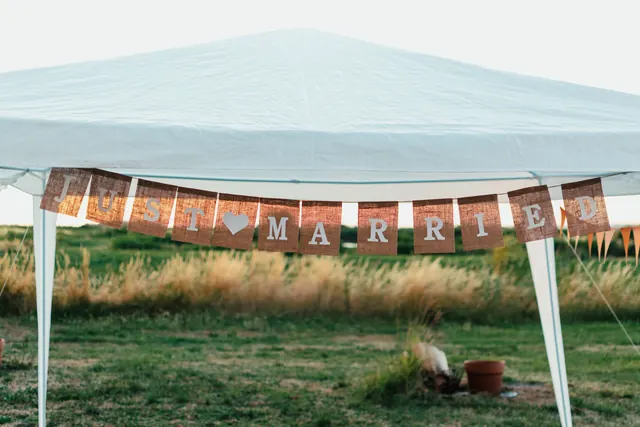 Wedding printJust Married bannersfrom £33.98Just Married banners for the car, the venue or your exit photos.Design it online →
 Wedding printPrinted wedding invitationsfrom £36.28Printed invitations and save the dates on quality card, with a QR code that opens your wedding website.Design it online →
 Wedding printThank-you cardsfrom £42.34Folded thank-you cards with your favourite photo from the day on the front.Design it online →
 Answers from couples and guests
No answers from readers yet. Been through this yourself? Share what worked for you.
Add your answer
Related questions
- What is a statutory wedding ceremony in the UK?
- What are the legal requirements for a Church of England wedding?
- What is wedding protocol and etiquette for the ceremony?
- What are the rules of dance at a wedding?
- What is wedding speech etiquette in the UK?
- What are some wedding ceremony traditions?
From other topics



 Save the date cards
 Order of service booklets
 Table plan boards
 Welcome signs