

Short answer
There is no fixed rule, but in many African families the couple's parents, especially the bride's family, traditionally contribute most of the cost. Today many couples pay for their own wedding or share costs across both families.
Who pays for an African wedding varies widely between families, communities and individual circumstances. In some Nigerian and other West African traditions, the bride's family takes the lead on funding the main celebration, while the groom's family covers specific parts such as the engagement or reception for their side. In other families the costs are shared more evenly, and some couples now fund their own wedding entirely.
Open conversation early is the best way to avoid misunderstandings. Sit down with both families and agree who is paying for what before you start booking venues or sending invitations. This includes the ceremony, reception, catering, attire, photography and any travel or accommodation for close family.
Keep in mind that:
- Large guest lists can quickly change the budget, so agree on numbers early.
- Some families prefer to give a cash gift instead of paying for specific items.
- Modern couples often combine traditions with their own preferences, so the arrangement can be whatever works for everyone.
If the wedding includes a legal ceremony in England, Wales or Scotland, remember that the couple is responsible for the legal fees and paperwork, regardless of who pays for the celebration.
From us
Website packages · Wedding print Wedding websiteSignature£749 one-offUnlimited events, bilingual wording, your own domain, guest photo upload and a live stream page.See Signature →
 Wedding websiteBespokefrom £999 one-offA fully custom website and video invite, and we chase every RSVP for you and send the final numbers to your caterer.See Bespoke →
 Wedding printPrinted wedding invitationsfrom £36.28Printed invitations and save the dates on quality card, with a QR code that opens your wedding website.Design it online →
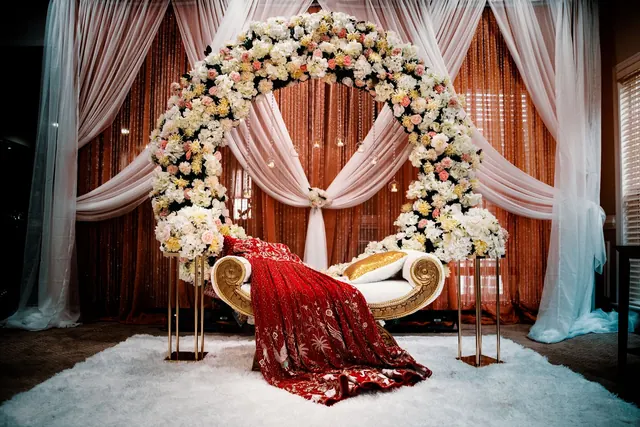 Wedding printWedding backdropsfrom £57.26Large printed backdrops behind the top table, the cake or the ceremony.Design it online →
 Answers from couples and guests
No answers from readers yet. Been through this yourself? Share what worked for you.
Add your answer
Related questions
- Who pays for a traditional Nigerian wedding?
- What is the etiquette for wearing black to an African wedding?
- What are the African American wedding traditions and customs?
- Can you have an African wedding in the UK and what are the legal requirements?
- What are the traditional African wedding dresses and attire?
- What is an African traditional wedding and how is it structured?
From other topics


 Save the date cards
 Order of service booklets
 Table plan boards
 Welcome signs
 Thank-you cards