

Aso ebi styles and colours for 2025 and 2026
Aso ebi is the matching outfit worn by family and close friends to show unity and celebrate the couple. For 2025 and 2026, expect bold geometric prints, pastel shades with metallic accents, and flowing gowns with dramatic sleeves. Popular aso ebi lace styles for women include off-shoulder tops, high-slit skirts, and peplum jackets worn over simple dresses. Men often wear matching agbada or senator suits in the same fabric or colour.
When choosing aso ebi colour combinations, start with the couple's wedding palette. Many couples pick two or three colours, such as burgundy with gold, or emerald with ivory. Ask your family and close friends for their opinions, but remember the final choice is yours. In the UK, you can order fabric online or from African fabric shops in cities like London, Birmingham and Manchester. Give your aso ebi group at least three months' notice, so they have time to have outfits made or altered.
Money spraying: tradition and etiquette
Money spraying is a joyful tradition where guests dance up to the couple and spray banknotes over them, often while they dance. It is a way of showering the couple with blessings and good wishes for their future. The money is usually collected by the couple or their attendants afterwards. In the UK, many couples provide a basket or a designated person to gather the notes, so nothing is lost.
There is no set amount you must spray. Give what feels comfortable for your budget and your relationship to the couple. Some guests spray small notes, others give larger ones. The key is to join the dance, smile and celebrate. If you are a guest and you are not sure, watch what others do and follow their lead. Some UK venues have rules about confetti or glitter, but money spraying is generally fine. Check with the venue beforehand if you are the couple, so there are no surprises on the day.
From us
Website packages · Wedding print Wedding websiteSignature£749 one-offUnlimited events, bilingual wording, your own domain, guest photo upload and a live stream page.See Signature →
 Wedding printPrinted wedding invitationsfrom £36.28Printed invitations and save the dates on quality card, with a QR code that opens your wedding website.Design it online →
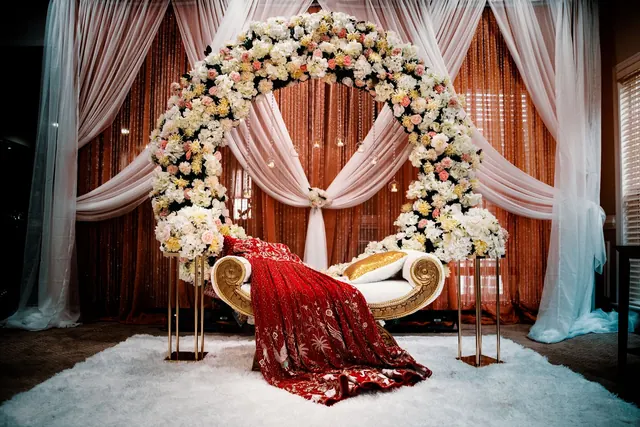 Wedding printWedding backdropsfrom £57.26Large printed backdrops behind the top table, the cake or the ceremony.Design it online →
 Wedding printThank-you cardsfrom £42.34Folded thank-you cards with your favourite photo from the day on the front.Design it online →
 Traditional Nigerian outfits for men and women
For women, the traditional outfit is often an iro and buba (wrapper and blouse), a gown called a kaftan, or a fitted dress with gele (head tie). The gele is a large, stiff fabric wrapped into a striking shape. Men wear agbada, a flowing wide-sleeved robe over a tunic and trousers, or a senator suit, which is a simple two-piece suit in matching fabric. Many men also wear a fila, a soft hat.
For the couple, the bride might wear a white wedding gown for the civil ceremony, then change into a traditional outfit for the reception. The groom often wears a white or ivory agbada with a matching cap. In the UK, you can find traditional outfits from Nigerian fashion designers, or have them made by a tailor who works with African fabrics. If you are a guest, you do not have to wear full traditional dress, but wearing aso ebi or a fabric in the wedding colours is a lovely way to show respect.
Traditional Nigerian wedding rings and their significance
Wedding rings in Nigerian weddings are often plain gold or white gold, but many couples now choose rings with engraved patterns or small diamonds. The rings symbolise the covenant between the couple, and they are exchanged during the traditional ceremony as well as the civil one. In some Nigerian cultures, the rings are blessed by elders or a religious leader before they are exchanged.
In the UK, you can choose any rings you like, as long as they are exchanged during a legal ceremony. If you are having a traditional Nigerian ceremony that is not legally binding, you will still need a separate civil ceremony to make the marriage legal under English or Welsh law. Many couples do the civil ceremony on a weekday, then hold the traditional ceremony and reception at the weekend. Remember, you do not have to wear a ring if you do not want to, but if you do, it is a lasting symbol of your commitment.
Nigerian wedding souvenirs and guest favours
Souvenirs are a big part of Nigerian weddings. Common favours include small decorated boxes of sweets, personalised fans, key rings, or items like hand sanitiser and lip balm with the couple's names and date. In the UK, you can order these from online printers or make them yourself. Many couples choose practical favours that guests will use, such as tote bags, coasters or small candles. Some couples also give out traditional items like kola nuts or small bottles of palm wine, but check venue rules about food and drink.
A thoughtful idea is to give a favour that reflects your heritage, such as a mini print of Ankara fabric, or a small booklet explaining the traditions of the day. If you have a gift list, you can also ask guests to contribute to a honeymoon fund instead of buying favours, but many guests still expect a small token. Keep favours simple and budget-friendly. The most important thing is the thought, not the cost.
What guests should wear to a Nigerian wedding in the UK
As a guest, you should aim for smart, colourful and modest clothing. If you have been given aso ebi, wear it. If not, wear formal attire in the wedding colours, or any bright, celebratory outfit. Women often wear dresses, skirts or jumpsuits, and many choose to wear a headwrap, even if it is not gele. Men wear suits, often in light colours, or traditional agbada if they have one. Avoid white, because that is usually reserved for the bride, and avoid black unless it is part of the dress code.
For a traditional Nigerian ceremony, you may be asked to remove your shoes before entering a religious building. Check the invitation for any dress code notes. In the UK, the weather can be unpredictable, so bring a shawl or jacket for outdoor photos. The most important rule is to dress respectfully and to join in the dancing and celebrations with a smile.
Nigerian wedding venues and legal requirements in the UK
Nigerian weddings in the UK often have two parts: a civil ceremony and a traditional ceremony. The civil ceremony must take place at a register office, an approved venue, or a religious building registered for marriages. The traditional ceremony can be held anywhere, such as a hotel, a community hall, or a marquee in a garden. You can find Nigerian-friendly venues by searching for large event spaces that allow dancing, music and your own caterers.
For the legal part, both of you must give notice at your local register office at least 28 days before the ceremony. You need two witnesses. If you are having a religious ceremony, check with the place of worship about banns or a licence. If you want a humanist or traditional ceremony to be legally binding, check the current rules on GOV.UK, because the law differs across the UK. In Scotland and Northern Ireland, humanist ceremonies can be legal, but in England and Wales they usually are not. Plan your dates carefully so the legal part is sorted first.
Checklist
- Choose your aso ebi colours and fabric at least three months before the wedding
- Order or make aso ebi outfits for family and close friends
- Decide how you will handle money spraying, including a basket or attendant
- Book your civil ceremony at a register office or approved venue and give notice in time
- Arrange a separate venue for the traditional ceremony if needed
- Order or make your traditional outfits, including gele and agbada
- Choose wedding rings and decide when to exchange them
- Plan your souvenirs and order them early
- Tell guests the dress code and colour scheme clearly on the invitation
- Check GOV.UK for the latest legal rules on marriage and humanist ceremonies
Questions on this topic
- What should a woman wear as a guest at a Nigerian wedding?
- Who pays for an African wedding?
- Can you mix a traditional Nigerian wedding with a white wedding in the same day?
- Who pays for a traditional Nigerian wedding?
- What are the 3 best color combinations for a wedding in Nigeria?
- What color do African brides wear?
- What is a traditional Nigerian wedding and how does it differ from a white wedding?
- What are the key traditions and customs at a Nigerian wedding?



 Save the date cards
 Order of service booklets
 Table plan boards
 Welcome signs