

Outer and inner envelopes: what is the difference?
Traditionally, a UK wedding invitation arrives in two envelopes. The outer envelope is the one that goes through the post. It carries the guest's full name and address, and it gets thrown away or recycled when the postie delivers it. The inner envelope sits inside the outer one and holds the invitation card, any inserts, and sometimes a reply card.
The inner envelope is not posted. It is addressed more informally, often with just the guests' titles and surnames, or even just their first names if you are close. For example, the outer envelope might say "Mr and Mrs James Carter", while the inner envelope says "James and Sarah". The inner envelope also protects the invitation from dirt and damage during posting, so it is a practical choice for heavier or more delicate stationery.
You do not need an inner envelope. Many modern couples skip it to save paper and postage. If you do, you simply address the outer envelope with the full formal names and the full address, and you add any guest names or "and family" details on the same envelope. The etiquette rules below work for both styles.
How to address families and guests on the outer envelope
For the outer envelope, use full formal titles and surnames. Spell out "Mister" and "Doctor" rather than abbreviating, though "Mr" and "Mrs" are widely accepted. Use "Ms" if you do not know a woman's preference, and avoid assuming married couples share a surname.
For a married couple with the same surname, write "Mr and Mrs James Carter" or "Mr James Carter and Mrs Sarah Carter" if they use different surnames. For an unmarried couple living together, put each name on a separate line: "Mr James Carter" then "Ms Sarah Jones". For a single guest, use their full name and title, such as "Miss Emily Brown".
For families with children, the outer envelope can say "Mr and Mrs James Carter" and then add "and Family" if children are invited. If you are inviting children by name, list them on the inner envelope or on the outer envelope below the parents' names. If children are not invited, do not mention them at all. For a guest with a partner whose name you do not know, write "Mr James Carter and Guest" on the outer envelope, or just "Mr James Carter" and add "and Guest" on the inner envelope if you have one.
From us
Website packages · Wedding print Wedding websiteE-Invite£149 one-offOne beautiful page with the details, a map and a family RSVP, sent by link, QR code or WhatsApp.See E-Invite →
 Wedding printPrinted wedding invitationsfrom £36.28Printed invitations and save the dates on quality card, with a QR code that opens your wedding website.Design it online →
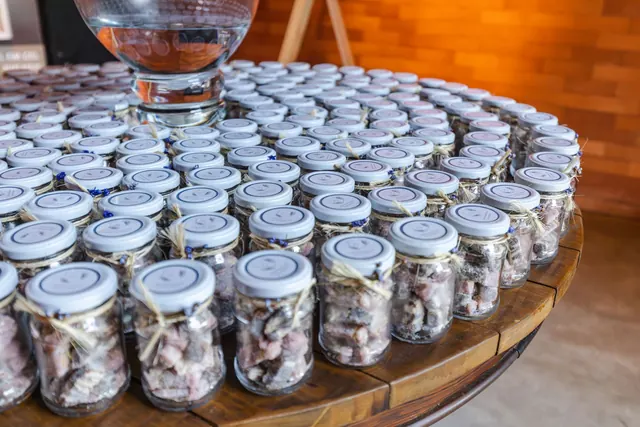 Wedding printFavour and envelope stickersfrom £25.62Sheets of printed stickers for favour boxes, jars and envelope seals.Design it online →
 Wedding printThank-you cardsfrom £42.34Folded thank-you cards with your favourite photo from the day on the front.Design it online →
 Do you put 'and guest' on wedding invitation envelopes?
Yes, you can put "and Guest" on the outer envelope if you are allowing a single guest to bring someone and you do not know their name. This is common and perfectly polite. Write it after the invited person's name, like "Miss Emily Brown and Guest".
If you have an inner envelope, you can write "and Guest" on the inner envelope instead, keeping the outer envelope formal with just the named guest. This is a neat way to keep the outer envelope looking clean. If you know the guest's name, always use it. It feels more personal and helps with your seating plan and reply cards.
If you are not offering a plus one, do not write "and Guest" anywhere. Just address the envelope to the named person. This avoids confusion and awkward conversations later.
Formal wording for the inner envelope
The inner envelope is your chance to be warmer and more specific. It usually has no address, just the names of the invited people. Use titles and surnames for formal weddings, or first names for close friends and family.
For a married couple, write "Mr and Mrs Carter" or "James and Sarah". For a family, write "Mr and Mrs Carter and Family" or list the children's first names underneath: "James, Sarah, Oliver and Poppy". For a single guest with a plus one, write "Miss Brown and Guest". For a guest without a plus one, just write "Miss Brown".
The key rule is that the inner envelope tells the guest exactly who is invited. If you write only the parents' names, children know they are not included. If you write "and Family", children know they are. This is the clearest way to manage your guest list without awkwardness.
How soon should wedding invitations be mailed out in the UK?
In the UK, send your wedding invitations about 8 to 10 weeks before the wedding. This gives guests time to check diaries, book travel and accommodation, and reply. For a wedding during a busy holiday period or a destination wedding in the UK, send them a little earlier, around 12 weeks.
You must also consider your reply deadline. Ask guests to reply at least 3 to 4 weeks before the wedding, so you have time to give final numbers to your venue and caterer. If you are having a religious ceremony, remember that banns or a licence need to be arranged separately, but that does not affect when you post invitations.
If you are sending save-the-date cards, send those 6 to 12 months ahead, but the formal invitation still goes out at the 8 to 10 week mark. For guests who live abroad, allow extra time for international post, so send their invitations a couple of weeks earlier.
Postage and stamps for wedding invitations in the UK
Wedding invitations often need extra postage because they are heavier than a standard letter. The exact postage depends on the size and weight of your envelope, so you cannot guess. Take one fully assembled invitation, with all inserts and the reply envelope, to your local Post Office and ask them to weigh it. They will tell you the correct postage and sell you the right stamps.
For a standard A5 or A6 invitation with a single card, a first or second class stamp may be enough. But if you have a thick card, multiple inserts, or an inner envelope, you will likely need a larger stamp or extra postage. Do not rely on a standard stamp for a heavy envelope, as it may be returned to you or delayed.
You can buy stamps at the Post Office, online, or at some supermarkets. You do not need special wedding stamps, though you can choose a decorative stamp if you like. To save on postage, keep your invitation light: use a single card rather than a thick folded one, skip the inner envelope, and avoid heavy ribbons or wax seals. Weigh your final version before buying stamps, and always buy a few extra stamps in case you need to re-send any invitations.
Addressing without an inner envelope: practical tips
If you decide not to use an inner envelope, the outer envelope does all the work. Address it with the full formal names and the full address, and include any "and Guest" or "and Family" details directly on the outer envelope. This is completely acceptable and very common in modern UK weddings.
For a family with children, write "Mr and Mrs James Carter and Family" on the outer envelope. For a guest with a named partner, write both names. For a guest with an unnamed partner, write "and Guest". The key is to be explicit so guests know exactly who is invited.
You can also use the reply card to clarify who is invited. Write the names of the invited guests on the reply card, or use a line like "We have reserved X seats in your honour" (but avoid numbers unless you are sure). If you are worried about clarity, add a small note inside the invitation saying "We look forward to welcoming James and Sarah" or "We have reserved seats for you and your guest". This avoids any confusion and keeps your envelope looking elegant.
Checklist
- Decide whether to use an inner envelope or just an outer one.
- Write full formal names and addresses on the outer envelope.
- Use titles like Mr, Mrs, Ms, Dr, and spell out names clearly.
- Add 'and Guest' only if you are offering a plus one.
- List children's names on the inner envelope or write 'and Family' if they are invited.
- Assemble one complete invitation with all inserts and weigh it at the Post Office.
- Buy the correct stamps based on the actual weight and size.
- Mail invitations 8 to 10 weeks before the wedding, or 12 weeks for holidays or abroad.
- Set a reply deadline 3 to 4 weeks before the wedding.
- Keep a few spare stamps in case you need to re-send any invitations.
Questions on this topic
- How to address wedding invitations correctly?
- How do you send a wedding invitation?
- Do you have to put Mr. and Mrs. on wedding invitations?
- What is the correct way to address wedding invitations?
- Do you write a wedding card to Mr. and Mrs.?
- What is the proper way to address a wedding invitation to a family?
- How to address wedding invites to parents?
- How are wedding invitations supposed to be addressed?



 Save the date cards
 Order of service booklets
 Table plan boards
 Welcome signs