

Short answer
The 3-5-7 rule is a simple guide for arranging objects in odd numbers. It suggests grouping items in threes, fives or sevens, because odd numbers look more natural and balanced to the eye than even numbers.
The 3-5-7 rule comes from the idea that odd numbers create visual interest and a sense of movement. When you group objects, an odd number feels less stiff and more organic. Three is the most common grouping, for example three candles of different heights, or three small vases along a table. Five works well for a longer table, and seven is best for very large displays.
The rule also applies to height and variety. In a group of three, you might have one tall item, one medium and one low. That creates a pleasing rhythm. You can mix shapes and textures too, such as a round vase, a square block and a trailing stem. The key is to vary the heights so the eye moves around the arrangement.
For wedding tables, you can use the rule in several ways. Place three small bud vases down the centre of a round table, or five tea lights in a row. For a long table, repeat a group of three or five along its length. You do not have to follow the rule strictly. It is a starting point, not a law. Trust your eye and step back to check the balance.
If a table looks flat, add one more item to make an odd number. If it looks cluttered, remove one. The rule is a gentle way to keep your table decorations simple and elegant.
From us
Website packages · Wedding print Wedding websiteWedding Website£499 one-offYour full wedding website with RSVP for every event, meal choices and a private link for each household.See Wedding Website →
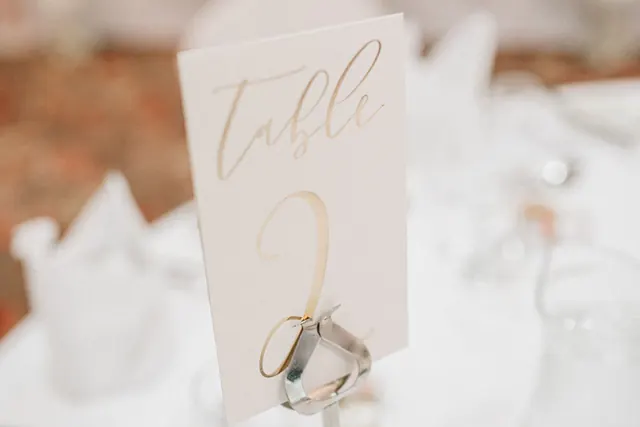 Wedding printTable numbers and place cardsfrom £14.52Folded tent cards for table numbers, table names, place cards and drink menus.Design it online →
 Wedding printPrinted wedding invitationsfrom £36.28Printed invitations and save the dates on quality card, with a QR code that opens your wedding website.Design it online →
 Wedding printThank-you cardsfrom £42.34Folded thank-you cards with your favourite photo from the day on the front.Design it online →
 Answers from couples and guests
No answers from readers yet. Been through this yourself? Share what worked for you.
Add your answer
Related questions
- What is the etiquette for wedding gifts from guests?
- Are candles allowed in hotel rooms for wedding guests?
- How tall should a wedding centrepiece be?
- How to decorate the head table at a wedding reception?
- How many tables for 100 guests wedding reception?
- How to decorate a wedding table cheaply?
From other topics



 Save the date cards
 Order of service booklets
 Table plan boards
 Welcome signs