

Short answer
The seven colour schemes are monochromatic, analogous, complementary, split complementary, triadic, tetradic and neutral. Each uses colour in a different way, from one shade to four colours, and each can be adapted to any wedding theme or season.
A monochromatic scheme uses one colour in different shades, tints and tones. Think sage, moss and forest green together. It looks calm and sophisticated. An analogous scheme uses three colours next to each other on the colour wheel, such as blue, blue green and green. It feels harmonious and natural.
A complementary scheme pairs two colours opposite each other, like blue and orange or red and green. It creates strong contrast and energy. A split complementary scheme takes one colour and the two colours either side of its opposite, such as yellow, red violet and blue violet. It gives contrast with more softness.
A triadic scheme uses three colours evenly spaced on the wheel, like red, yellow and blue. It is bold and playful. A tetradic scheme uses four colours in two complementary pairs, such as purple, yellow, green and red. It is rich and complex, so use it sparingly. A neutral scheme relies on whites, creams, greys, browns and black. It is timeless and lets textures and flowers shine.
You do not need to follow these strictly. They are starting points. Pick one that reflects your taste and the mood you want on the day. Your venue, season and flowers will all influence how the colours look in practice.
From us
Website packages · Wedding print Wedding websiteWedding Website£499 one-offYour full wedding website with RSVP for every event, meal choices and a private link for each household.See Wedding Website →
 Wedding websiteSignature£749 one-offUnlimited events, bilingual wording, your own domain, guest photo upload and a live stream page.See Signature →
 Wedding printWedding welcome signsfrom £20.38Rigid welcome boards for the entrance or an easel, printed with your names and date.Design it online →
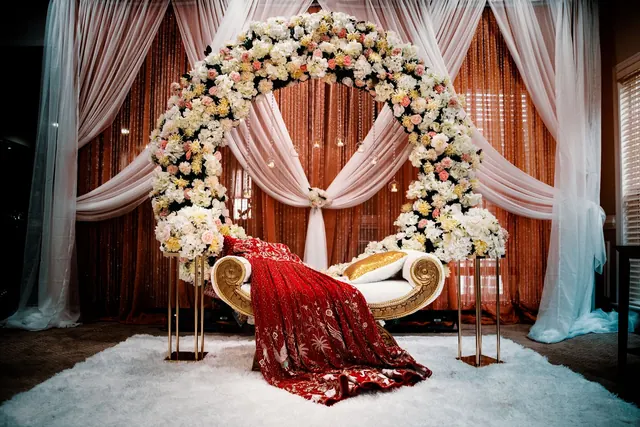 Wedding printWedding backdropsfrom £57.26Large printed backdrops behind the top table, the cake or the ceremony.Design it online →
 Answers from couples and guests
No answers from readers yet. Been through this yourself? Share what worked for you.
Add your answer
Related questions
- How to pick a wedding color scheme?
- What are classy wedding colors?
- What is the 3 color rule?
- What colors are frowned upon at weddings?
- Which color is best for wedding decoration?
- What colors are not acceptable at a wedding?
From other topics


 Wedding invitations
 Save the date cards
 Order of service booklets
 Table plan boards
 Thank-you cards