

What is a wedding table plan board?
A wedding table plan board is a display that shows where each guest is seated. It usually lists table names or numbers and the names of the guests assigned to each. The board can be a large framed poster, a mirror, a piece of fabric, or even a series of cards. Its job is to help guests find their table without asking you or your wedding party a dozen times.
You can place the board near the entrance to the reception, on an easel, or propped against a wall. Make sure it is visible and easy to read. If you have many guests, consider grouping names alphabetically by surname under each table heading, so people can find themselves quickly.
How do I create a wedding table plan?
Start by listing all your guests and deciding who will sit together. Think about family groups, old friends, and people who might enjoy each other's company. You do not have to seat everyone with people they know. Many couples mix tables so guests can make new friends, but it is kind to seat shy guests with at least one familiar face.
Once you have your guest list, choose your table layout. Common options are round tables of 8 to 10, long banquet tables, or a mix. For each table, assign a name or number. Table names can be places, songs, films, or anything meaningful to you. Then place each guest at a table.
You can create your plan on paper, a spreadsheet, or a free online template. Many wedding website builders include a table planner tool. When you are happy, you can print the final plan at home, at a print shop, or order a professionally printed board.
From us
Website packages · Wedding print Wedding websiteWedding Website£499 one-offYour full wedding website with RSVP for every event, meal choices and a private link for each household.See Wedding Website →
 Wedding printWedding welcome signsfrom £20.38Rigid welcome boards for the entrance or an easel, printed with your names and date.Design it online →
 Wedding printTable plan boards (A1)from £51.46A1 foamex boards for your table plan, light enough for an easel and easy to read from a distance.Design it online →
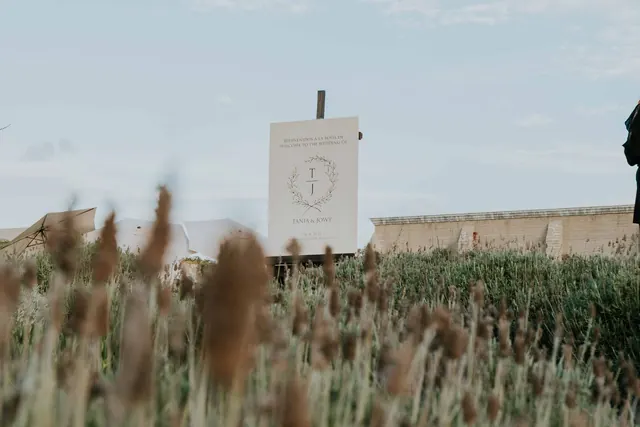 Wedding printA2 sign boardsfrom £37.18A2 boards for the order of the day, the bar menu, an unplugged ceremony sign or directions.Design it online →
 Traditional table layouts and top table design
The top table is the table where you and your key people sit. Traditionally it includes the couple, their parents, and sometimes the best man, chief bridesmaid, and other attendants. But there is no rule that you must follow. Many couples now sit with friends, or have a sweetheart table for just the two of them. Choose what feels right for you and your family shape.
If you have a top table, think about the seating order. A common arrangement is: chief bridesmaid, mother of the groom, father of the bride, bride, groom, mother of the bride, father of the groom, best man. But you can adapt it. For same-sex couples, simply decide who sits where. The important thing is that everyone feels comfortable.
For the rest of the tables, you can seat guests however you like. Some couples use a 'pick a seat not a side' sign to tell guests they do not need to choose a side for the ceremony. That sign is not a table plan, but it works well with one. It means guests can sit anywhere they like for the ceremony, so there is no bride's side or groom's side.
Etiquette for seating guests
There is no strict etiquette for wedding seating in the UK, but a few kind rules help. Seat people with people they know, but also consider putting solo guests with friendly groups. If you have divorced parents, seat them at different tables unless they are happy to sit together. If you have guests with mobility needs, seat them near the entrance or the buffet. If you have children, decide whether they sit with their parents or at a kids' table.
For the top table, you do not have to include all parents. Some couples have both sets of parents, some only one, and some none. It is your wedding. The same goes for the bridal party. If you have a best man and a maid of honour, you might include them, or you might not. The key is to make everyone feel valued, but not to cause stress.
If you have a large guest list, you may want to seat people by groups: family, work friends, school friends, and so on. That makes it easier to plan and helps guests find their people. You can also use a seating chart with a floor plan, showing where each table is in the room. That is especially helpful for a large venue.
Wording for your table plan sign
Your table plan sign should be clear and simple. The heading can be 'Find your table', 'Where are you sitting?', or 'Tonight's seating'. Then list each table name or number, followed by the names of the guests. You can use first names only, or first names and surnames, depending on how many guests you have. If two guests share a name, add their surname or a distinguishing detail.
You can add a friendly line at the top, such as 'Please find your seat' or 'Grab a drink and find your table'. Some couples add a humorous line like 'We did the seating so you don't have to argue'. Keep it warm and in your own voice. If you have a 'pick a seat not a side' sign for the ceremony, you can use similar wording on your table plan, such as 'No sides, just our favourite people'.
For a welcome sign, you might write 'Welcome to our wedding' or 'Thank you for coming'. You can add your names and the date. Some couples include a short message like 'We are so happy you are here'. If you want an unplugged wedding sign, you can write 'Please put your phones away and enjoy the moment' or 'We have a photographer, so please no photos during the ceremony'. That is not a table plan, but it is often displayed nearby.
DIY, printing and display options
You can print your table plan yourself at home, but for a polished look, consider a professional print. Many online print services and local print shops offer large-format printing on paper, card, or canvas. You can also print on a mirror, but that usually needs a special printer or a vinyl decal. A simpler DIY option is to buy a large frame and print your design on A3 or A2 paper, then slot it in. You can also write names on place cards and pin them to a board.
For a fabric table plan, you can print on cotton or linen, or use a fabric marker to write on a pre-stretched canvas. Fabric plans are easy to fold and carry. For a mirror plan, you can use a glass marker or a vinyl cutter. If you are not confident, you can order a printed vinyl decal to apply to a mirror you already have.
Think about the stand. A wooden easel is classic, but you can also use a metal A-frame, a tripod, or simply lean the board against a wall. Make sure the stand is stable and the board is at eye height for most guests. If your wedding is outdoors, weigh the stand down or choose a heavy board. You can also hang the plan from a wall or a hook.
Templates and tools to help you
You do not need to design from scratch. Many wedding websites and print shops offer free table plan templates. You can also use a simple word processor or a design app. Look for a template that lets you add table names and guest names easily. Some templates include a floor plan, so you can drag and drop tables and names.
If you are not confident with design, you can ask a friend who is good with computers, or use a local print shop that offers design help. Many print shops will help you set up your file for printing. Remember to check the file size and resolution. A low-resolution image will look blurry when printed large.
If you are making your own, use a clear font that is easy to read from a distance. Avoid fancy script for the names, or use it only for the heading. Use high contrast, like black text on a white or cream background. If you use a mirror, make sure the writing is large enough. Test print on a small scale first to check the layout.
Checklist
- List all guests and decide who sits with whom
- Choose a table layout (round, long, or mix)
- Decide on the top table arrangement or sweetheart table
- Assign table names or numbers
- Create a draft plan on paper or a digital tool
- Check for any guest name spelling errors
- Choose a design and font that is easy to read
- Print a test copy on a small scale
- Order or print the final table plan board
- Set up the board on a stable stand at the venue
Questions on this topic
- How much is a welcome sign for a wedding?
- Can I make a DIY wedding welcome sign?
- What are some unique and unique ideas for a wedding welcome sign?
- What material should I use for a wedding welcome sign?
- What is the standard size for wedding signs?
- What are typical sign sizes?
- How big does a welcome sign need to be?
- Is A2 big enough for a welcome sign?



 Wedding invitations
 Save the date cards
 Order of service booklets
 Thank-you cards