

Start with your ceremony time and work backwards
The ceremony time is the anchor of your whole day. In the UK, most weddings start between 1pm and 3pm, but you can choose any time that suits you. For a summer wedding, a later start, around 3pm or 4pm, lets you enjoy lighter evenings and outdoor drinks. For a Friday or weekday wedding, an earlier start, around 1pm, gives guests time to travel after work or take a half day. For a Sunday wedding, a midday or 1pm start works well if you want to finish earlier.
Once you set the ceremony time, work backwards for getting ready and forwards for the reception. Allow at least two hours for getting ready, including hair, make-up, dressing, and photos. Then add travel time to the venue, plus a buffer of 30 minutes for traffic or nerves. Write your ceremony time on your invitations, and add a separate guest arrival time, usually 30 minutes before, so people are seated and settled.
Getting ready: timings for the morning and early afternoon
Plan your getting-ready block to end about 60 to 90 minutes before the ceremony. This gives you time for final touches, a calm moment, and travel. If you are having professional hair and make-up, book your appointments so the last person finishes at least 45 minutes before you need to leave. Ask your photographer or videographer when they want to start, usually 30 to 60 minutes before the ceremony, and plan outfit changes around that.
If you are getting ready at home, a venue, or a hotel, think about space and light. Have a packed emergency kit with safety pins, plasters, mints, and a sewing kit. Eat something before the ceremony, even if you feel nervous. Delegate a bridal party member or a parent to keep everyone on schedule, but keep the pace relaxed. You do not want to feel rushed on the morning of your wedding.
From us
Website packages · Wedding print Wedding websiteWedding Website£499 one-offYour full wedding website with RSVP for every event, meal choices and a private link for each household.See Wedding Website →
 Wedding printWedding welcome signsfrom £20.38Rigid welcome boards for the entrance or an easel, printed with your names and date.Design it online →
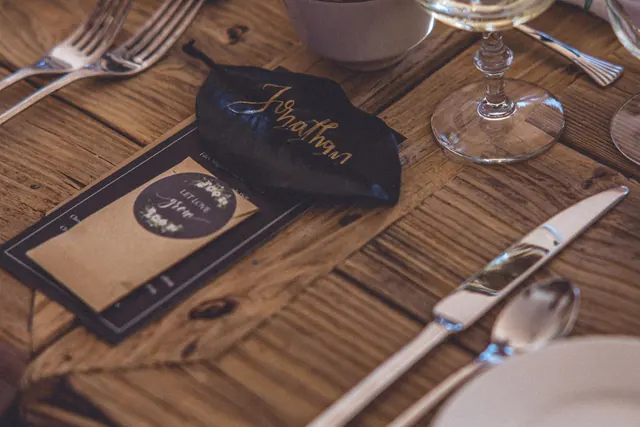 Wedding printFolded menus and programmesfrom £48.78Creased and folded cards for menus, a simple order of service or the plan for the day.Design it online →
 Wedding printPrinted wedding invitationsfrom £36.28Printed invitations and save the dates on quality card, with a QR code that opens your wedding website.Design it online →
 Guest arrival and the ceremony: what time should guests arrive?
Invite guests to arrive 30 minutes before the ceremony start time. This allows for parking, finding seats, and any last-minute welcomes. If your venue is remote or parking is limited, add an extra 15 minutes and say so on your invitation, for example, "Please arrive by 1.45pm for a 2.15pm ceremony." For a summer wedding, remind guests that the ceremony may be outdoors, so they can dress accordingly.
The ceremony itself usually lasts 20 to 40 minutes for a civil ceremony, and longer for a religious or cultural ceremony with readings or music. Build in 10 minutes of buffer after the ceremony for the signing of the legal documents. In England and Wales, you need two witnesses to sign the marriage schedule. In Scotland and Northern Ireland, the rules are similar, so confirm with your registrar or celebrant. After the ceremony, guests will naturally move to the drinks reception, so have clear signs or staff to guide them.
Drinks reception and photos: how long and what to plan
The drinks reception typically lasts 60 to 90 minutes. This is when guests mingle, enjoy a drink, and you take your formal photos. If you want a shorter reception, 45 minutes is possible, but 60 minutes is comfortable. Serve a mix of alcoholic and non-alcoholic drinks, and consider a seasonal drink like Pimm's in summer or mulled cider in winter. Have a few canapés or light snacks, especially if the meal is later.
Plan your photo list in advance. List the group shots you want, and give a copy to your photographer and a bridal party member. Keep group photos to 15 to 20 minutes, then move to couple portraits. If you want to enjoy the reception, ask your photographer to take candid shots while you chat. If you are having a confetti toss or a receiving line, do it early in the reception so guests can settle. For outdoor weddings, remember that summer evenings can be bright, so plan photos for softer light, either before the ceremony or in the early evening.
Wedding breakfast and speeches: timing for the meal
The wedding breakfast, which is the main meal, usually starts about 1.5 to 2 hours after the ceremony. So if your ceremony is at 2pm, aim to sit down for the meal around 4pm. The meal itself takes about 1.5 to 2 hours for three courses. Service can be slower for larger groups, so add 30 minutes if you have more than 100 guests. After the meal, you might have a short break for guests to stretch or visit the loo.
Speeches usually happen during or after the meal, often between courses or after dessert. The traditional order is the host or parent, then the couple, then the best person, but you can change it to suit you. Keep speeches to 5 minutes each to hold attention. If you have many speakers, set a time limit. After the speeches, you can move the guests to the evening reception area or keep them at the tables for a short while. Plan for a gap of 30 minutes between the meal and the evening party, so the venue can turn the room around.
Evening reception, first dance, and last dance: wrapping up the day
The evening reception usually starts around 7pm or 8pm, with a second wave of guests arriving. Welcome evening guests with a drink and a simple buffet or cake. The first dance often happens after the evening guests have settled, around 8pm or 8.30pm. If you are not comfortable dancing, you can have a first dance as a group, or skip it and open the floor with a favourite song. Then the DJ or band plays, and guests dance until the end of the night.
Plan the last dance and the end time. Many UK weddings end between 11pm and midnight, but you can choose earlier or later. If you have a curfew, tell your DJ or band. For a summer wedding, you might have an outdoor sparkler send-off or a quiet close with a final song. Make sure you have a plan for transporting the wedding party and any decorations at the end. A good timeline builds in 15 minutes for a final thank-you to your guests and your team.
Build your own schedule: tips for a realistic timeline
Start with your ceremony time, then add each block: getting ready, travel, ceremony, drinks, photos, meal, speeches, evening reception, and last dance. Use a spreadsheet or a piece of paper, and write down the start and end times for each block. Add a 15 to 30 minute buffer between each major part. For example, if your ceremony ends at 2.45pm, plan the drinks reception to start at 3pm, not 2.45pm.
Think about your venue and the season. In winter, it gets dark early, so plan photos earlier in the day. In summer, you can have an outdoor ceremony later, but check the sunset time. For a Friday wedding, guests may arrive later, so consider a later ceremony, around 2pm or 3pm. For a Sunday, you might want to finish by 10pm so guests can travel home. Always confirm your timings with your venue, registrar, and key suppliers, and share the final timeline with your bridal party and family. A realistic timeline reduces stress and helps everyone know what happens next.
Checklist
- Choose your ceremony time and work backwards
- Book hair and make-up with enough time to finish 60 minutes before the ceremony
- Set a guest arrival time 30 minutes before the ceremony and put it on your invitations
- Plan a 60 to 90 minute drinks reception with photos
- Schedule the wedding breakfast to start 1.5 to 2 hours after the ceremony
- Keep speeches to 5 minutes each and place them between courses or after dessert
- Decide on the evening reception start time and first dance time
- Agree an end time with your DJ or band and plan a final send-off
- Add a 15 to 30 minute buffer between each major part of the day
- Share the final timeline with your venue, suppliers, and bridal party
Questions on this topic
- What is a normal wedding day timeline?
- What time should a wedding ceremony be?
- What time should evening guests arrive at a wedding reception?
- What is the typical order of a wedding day?
- How to make a wedding day memorable?
- What is a realistic timeline for a wedding?
- Is 12 PM too early for a wedding?
- How long is a wedding if it starts at 4?



 Save the date cards
 Order of service booklets
 Table plan boards
 Thank-you cards